


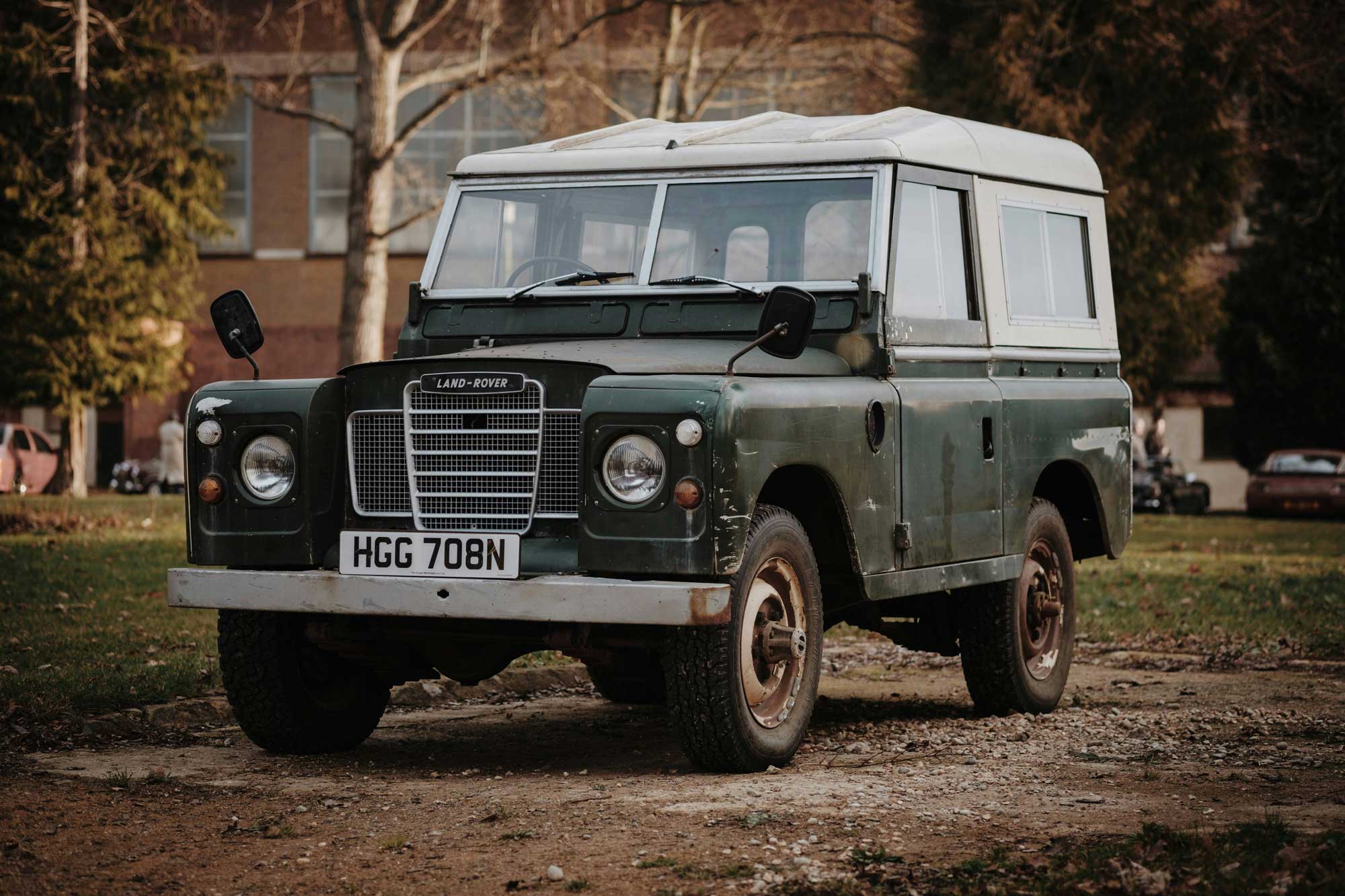
At Optimill, we live and breathe Land Rovers — particularly the Defender. Tough, dependable and iconic, it’s a vehicle that’s more than just transport. It’s a statement of purpose. But where did it all begin?
From post-war necessity to off-road legend
The Defender’s roots stretch back to 1948, when the Rover Company launched the Land Rover Series I at the Amsterdam Motor Show. Born out of post-war steel shortages and inspired by the Willys Jeep, the original Land Rover featured lightweight aluminium bodywork and was built with one goal in mind: utility.
It wasn’t a lifestyle vehicle. It was built for the fields, for the military, for those who needed something that could go where nothing else would.
The Series era: 1958–1985
The Series II and III models followed, gradually refining the shape and mechanicals while keeping that same go-anywhere ethos. Land Rovers became fixtures on farms, in the military, and on expeditions across the globe. If there was a remote outpost, chances are a Series Land Rover got there first.
The Series III, introduced in 1971, became the most popular model in the line — and laid the groundwork for the Defender we know today.
The Defender is born (1990)
With the arrival of the Land Rover Discovery in 1989, the traditional workhorse needed a new name. So in 1990, the ‘Land Rover Ninety’ and ‘One Ten’ became the Defender 90 and Defender 110.
This wasn’t just a name change — it marked a new chapter. The Defender was still tough and agricultural, but began to evolve. Coil springs replaced leaf springs, disc brakes appeared, and new engines gave it a bit more grunt. But it was still a vehicle built with a socket set, not software.
Over the next 25 years, the classic Defender became a global icon. From remote African safaris to mountain rescue teams and military deployments, the Defender earned its place as one of the most capable off-road vehicles ever made.
2016: The end of an era
By 2016, increasingly strict emissions and safety regulations forced Land Rover to cease production of the classic Defender. For many, it was the end of a legend — a moment that marked the closing of a very special chapter in British automotive history.
But legends never truly die.
2020: The Defender reborn
The new Defender, launched in 2020, was a clean-sheet design. Modern, tech-laden, and far more refined than its predecessor, it retained the rugged spirit of the original but brought it into the 21st century.
Built on a unibody chassis, packed with Terrain Response systems and loaded with creature comforts, it divided opinion. But while the purists argued, a new generation of Defender fans were born — adventurers, families, and explorers alike.
It’s a different kind of tough now. Less spanners, more software. But it’s still a Defender.
Why heritage matters to us
At Optimill, we honour the Defender’s roots in everything we design. Whether it's our precision-machined steering wheels or anti-theft accessories, every product is made to enhance the Defender’s performance and security — without losing its soul.
Because a vehicle with this much heritage deserves parts built to last just as long.
-

February 05, 2025
Securing Your Land Rover Defender Against Theft -

February 05, 2025
The Top 10 Custom Upgrades for Your Land Rover Defender -

February 06, 2025
Optimill Steering Wheels:The Perfect Upgrade for Your Defender